

You load the dishwasher on a Sunday evening, press start, and nothing happens. Or your refrigerator starts making a noise you have never heard before. Sound familiar? Appliances break at the worst times, and the bill can be a nasty surprise. And, you ask yourself: how much will this appliance repair cost? And is it smarter to fix it or buy new?
The answer depends on several factors, including the appliance and brand type, the failed component, and labor rates in your area. Understanding these expenses helps you decide whether to fix a broken machine or replace it entirely.
This blog post will serve as an appliance repair price guide for homeowners frustrated by sky-high repair bills. It breaks down real-world data, hidden service fees, and strategic ways to avoid paying these high expenses out of pocket. Many wonder whether a home warranties makes more financial sense than paying for every fix as it happens.
Let’s help you decide what works best for your home.
How Much Do Different Types of Appliance Repair Cost in 2026?
According to data from the Home Guide, repair jobs for common appliances typically range from $100 to $400, depending on the appliance and issue.
Most repair bills include several components:
- Diagnostic Fee / Service Call Cost: $75 - $125
- Labor charges: $100 - $25
- Replacement parts and materials: $50 - $300+
- Applicable taxes: 0% to 10%
A technician usually charges an appliance repair cost per hour before repairs begin. The typical cost ranges from $50 to $150, depending on the company and location. Specialized appliances or emergency visits may increase the rate.
Here is a simple appliance repair cost breakdown homeowners should expect:
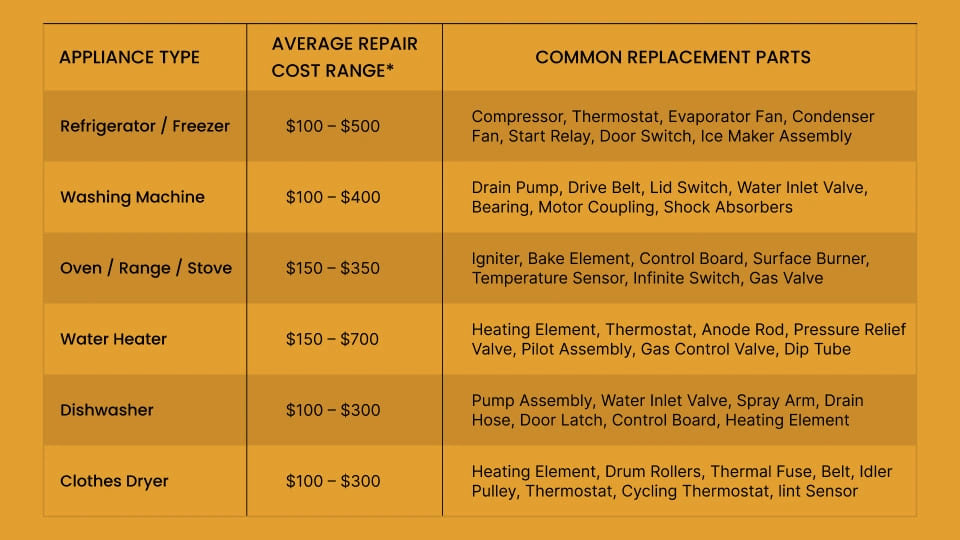
*All cost ranges align with 2025–2026 national averages from HomeGuide and Consumer Affairs. Prices include parts and labor.
Also, these ranges reflect current national averages. Actual prices depend on brand, problem, and location.
What Factors Affect Your Cost of Appliance Repair?
Several elements shape your final invoice. Here is the list of factors that influence your pricing.
1. Appliance Brand:
Appliance repair costs can vary significantly by brand. Popular brands such as Whirlpool, GE Appliances, and Frigidaire typically have widely available parts and service technicians, which can help keep costs lower. In contrast, premium brands like Sub-Zero, Miele, and Viking often require specialized parts and trained technicians, increasing repair expenses.
For example, a refrigerator compressor replacement may cost around $700–$1250 for many mainstream brands. On the contrary, a similar repair on a premium appliance can range from $400–$800 or more, depending on the model and parts required.
2. Geographic Location:
Appliance repair pricing can vary considerably by location across the country. Urban areas typically see rates 20% to 40% higher than smaller cities or rural areas.
For example, a homeowner in New York City may pay $300–$450 to fix a washing machine drain pump. The same repair could cost $180–$300 in a smaller city or rural community where labor rates are lower. Travel time, technician availability, local demand, and business overhead all influence the final bill.
This is why two homeowners with the exact same appliance problem can receive very different repair quotes simply because they live in different markets.
3. Type of Problem:
The specific issue often has the biggest impact on repair costs. A simple fix, such as replacing a worn door seal or faulty switch, may cost less than $150. However, major repairs involving control boards, compressors, motors, or refrigerant systems can quickly push the bill into the $400–$800 range, depending on the appliance and parts required.
4. Parts Availability:
If a replacement part must be ordered, especially for older models, the cost can spike. In 2025, tariffs on parts and components imported from China and Mexico are pushing repair costs up by 5% to 20% in some cases.
5. Emergency and Same-day Repairs:
Emergency and same-day appliance repair costs carry a premium. Expect to pay 25% to 50% more if you need a technician outside of regular business hours. Weekend rates are also higher.
Understanding these factors helps you ask better questions when requesting an appliance repair quote from a service provider.
Repair vs. Replace: How Do You Know Which Choice Is Better?
One of the most common questions homeowners ask is: Should I repair or replace my appliance? There is actually a practical rule of thumb used by many appliance technicians.
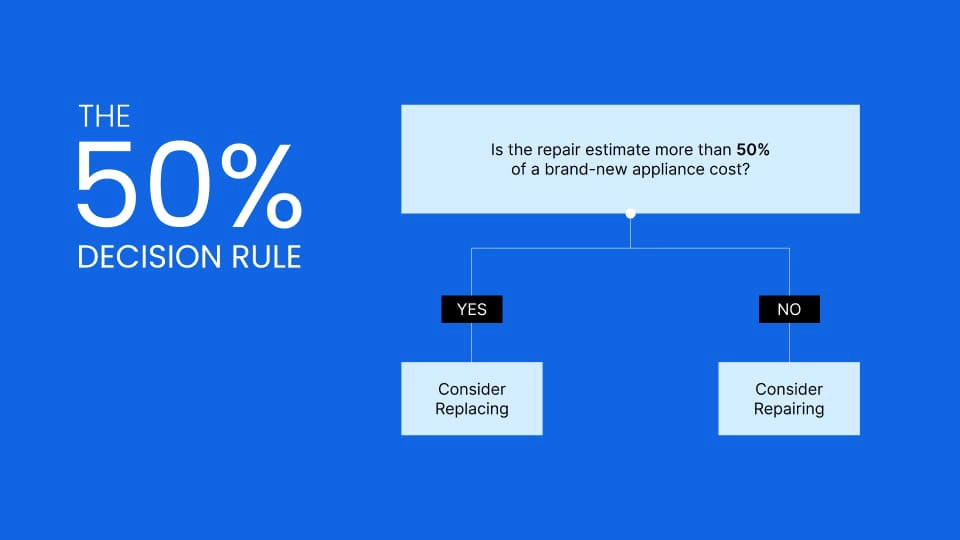
The 50% Rule
If the appliance repair price exceeds 50% of the cost to buy a new appliance, replacement is usually the better financial decision. For example, if your dishwasher is worth $600 and the repair quote is $350, you are approaching that threshold.
Appliance age also matters. This Old House data shows that appliances near or past their average lifespan are statistically more likely to need additional repairs within a few years. Repairing old appliances versus replacing them is rarely straightforward, but age plus repair frequency should guide your thinking.
When Repair Typically Makes More Sense
- The appliance is less than halfway through its expected lifespan.
- The repair involves a simple part replacement with low labor charges.
- The appliance has strong energy efficiency ratings that would be costly to match with a new unit.
- You are covered by an appliance breakdown coverage plan that limits your out-of-pocket costs.
When Replacement Is Usually Smarter
- The appliance has needed multiple repairs in the past two years.
- The diagnostic fee for repair reveals multiple failing components.
- The appliance is significantly less energy-efficient than current models.
- The repair return on investment is low given the unit's remaining useful life.
Are Appliance Repairs Covered by a Home Warranty?
Yes, and this is where the appliance repair cost conversation shifts considerably for homeowners who plan ahead. A home warranty is a service contract that covers the repair or replacement of major appliances and home systems that break down due to normal wear and tear.
It is different from a manufacturer's warranty, which typically covers defects and expires after one to two years. If you consider buying First Premier’s home warranty coverage, you will get coverage for the standard set of major appliances, including:
- Refrigerators
- Washers and dryers
- Oven
- Whirlpool Bathtub
- Cooktop
- Built-in Microwave
- Trash Compactor
- Garage Door Opener
- Ceiling & Exhaust Fans
- Garbage Disposal
- Water Heater
- Dishwasher
When a covered item breaks down, you submit a claim. A service contractor from our network is dispatched to diagnose and fix the issue. You pay a home warranty service fee, which typically ranges from $60 to $125 per claim. The appliance warranty protection plan covers the remaining approved repair or replacement costs.
Related Read: If you are exploring the common household appliance repair and replacement process, check out our guide on How to Replace a Garage Door Opener Safely. It walks through the replacement process step-by-step, costs, key safety considerations, and when it may be better to call a professional.
A Real Homeowner Example: How Home Warranty Reduced Repair Costs
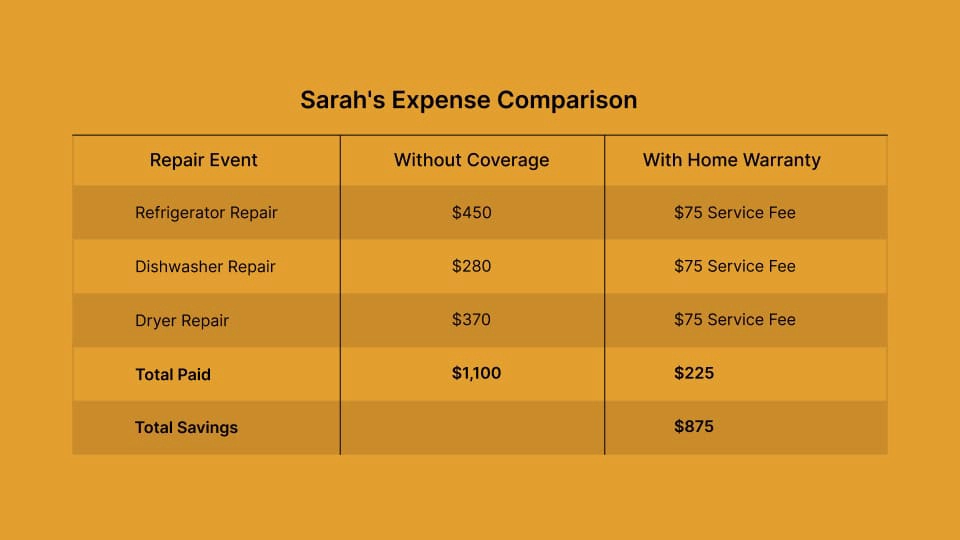
Sharing with you the experience of Sarah, a homeowner in Ohio. Over just four months, she faced three separate appliance breakdowns. A refrigerator that stopped cooling ($450), a dishwasher with a failed pump ($280), and a clothes dryer ($370) that no longer produced heat. Had she paid for each repair herself, the combined cost of diagnostic visits, labor, and replacement parts would have approached $1,100.
Because she carried an active home appliance warranty plan, she avoided these individual bills. She placed three separate claims and paid only her standard, predictable service fee for each visit. The warranty provider handled the remaining labor and parts expenses.
The Bottom Line
Appliance repair costs are predictable only in range, not timing. Reviewing typical repair prices and comparing them to replacement costs helps you decide when to fix or replace.
Paying hundreds of dollars for every appliance breakdown can add up fast. First Premier Home Warranty provides appliance protection plans designed to help you manage repair costs more predictably. This is the reason many consider it one of the best home warranty choices available today.
Get a Free Quote or call us at 1-800-388-1918 to explore our coverage options to see what fits your home and budget.
Frequently Asked Questions
What is a typical appliance diagnostic fee?
Most technicians charge a diagnostic fee of $50 to $100 to inspect an appliance and identify the problem. This fee is often applied toward your total repair cost if you proceed with the service.
Do appliance repair costs vary by state?
Yes, significantly. States like California, New York, and Massachusetts tend to have higher labor rates, which pushes costs 20% to 40% above the national average. Rural and Midwestern markets are generally more affordable.
How long does an appliance repair usually take?
Simple repairs like a dryer belt or door latch can be completed in under an hour. More complex issues involving control boards or compressors may require a return visit once parts are ordered, adding one to five business days to the timeline.
Can I negotiate an appliance repair quote?
Yes, you can request itemized quotes from multiple service providers and compare appliance repair service call cost versus parts costs. Some independent repair shops offer lower labor charges than manufacturer-authorized service centers, giving you some room to manage your expenses.
Are newer smart appliances more expensive to repair?
Generally, yes. Smart appliances with Wi-Fi connectivity have more electronic components that can fail, and repair requires software diagnostics alongside mechanical skills. Research indicates that connected appliances experience significantly higher problem rates than non-connected models.
What is the difference between a home warranty and a manufacturer's warranty for appliances?
A manufacturer's warranty covers factory defects and typically lasts one to two years. A home warranty is a renewable service contract that covers breakdowns caused by normal wear and tear, regardless of how old the appliance is. Home appliance warranty plans are purchased separately and provide ongoing coverage well beyond what a manufacturer's warranty offers.
Related Posts




1-800-388-1918
Protect Your Property, Secure Your Peace: Your Plan Starts Here.