
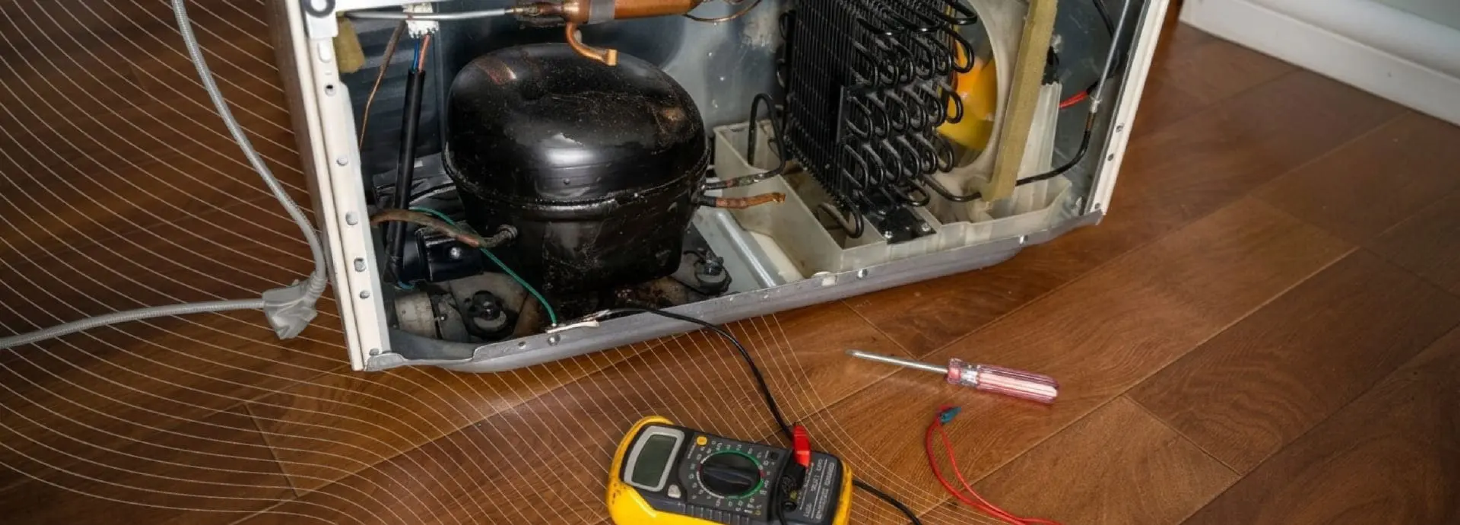
If your fridge suddenly stops cooling the way it should, it can feel like a race against time to save your groceries. One of the most common reasons behind this issue is a faulty compressor, the component responsible for circulating refrigerant and maintaining the cooling cycle. Learning how to replace a refrigerator compressor can help you understand what’s involved before calling a professional or attempting a repair yourself.
As per the U.S. Energy Information Administration’s survey on residential energy consumption, refrigerators are among the top three energy-consuming appliances in American homes. The compressor accounts for a large share of that energy use, and when it gives out, the entire unit goes with it.
So if you've noticed your fridge running warm, making strange noises, or cycling non-stop, this guide is for you. It gives you a clear overview of what the process of replacing a refrigerator compressor involves. It also helps you decide whether it’s something you can handle yourself or is better left to a professional.
What Does a Refrigerator Compressor Do?
The compressor is the core component of your refrigerator. It’s a small but powerful motor that circulates refrigerant through the cooling system. This continuous loop pulls heat from inside the fridge and releases it into the surrounding room.
A quick explanation of how that cycle works:
- The compressor pressurizes refrigerant gas, raising its temperature.
- The hot gas travels through condenser coils (usually at the back of the fridge), where it releases heat into the room.
- The gas cools and turns into a high-pressure liquid, then passes through an expansion valve, causing a quick pressure drop.
- Once cooled, the refrigerant passes through the evaporator coils, drawing heat from the air inside the fridge.
The cycle repeats, driven entirely by the compressor.
Without this crucial part working properly, this cycle stops. The fridge can no longer maintain a safe or consistent temperature, and everything inside it is at risk. So, it's not a component you can skip or work around, but it's foundational to how the appliance functions.
What are the Early Signs of Compressor Failure in a Refrigerator?
Compressor problems don't always announce themselves loudly. Sometimes the warning signs are subtle and easy to dismiss, until the damage has already been done. Here are the most common indicators that the cooling unit is struggling, and you need to know how to replace a refrigerator compressor:
1. The fridge isn't cooling properly
If your food is spoiling faster than usual, your beverages feel lukewarm, or the temperature seems inconsistent, the compressor may not be circulating refrigerant efficiently. This is often one of the first signs homeowners notice.
2. Compressor runs constantly
An efficient compressor cycles on and off throughout the day. If yours runs non-stop without ever shutting off, it's likely struggling to reach the set temperature, a classic sign of reduced efficiency or internal wear.
3. Unusual noises
Clicking, knocking, rattling, or humming sounds coming from the back or bottom of the fridge may point to a motor that's straining. A healthy unit should be relatively quiet during operation.
4. The compressor is hot to the touch
Some warmth near the back of the fridge is completely normal. But if its housing feels excessively hot, it may be overheating, often due to dirty condenser coils, poor ventilation, or internal damage.
5. Circuit breaker trips
A failing motor can draw too much electrical current. If your fridge frequently trips the circuit breaker or causes a spike in your electricity bill, the compressor could be to blame.
6. The fridge won't turn on at all
If the light inside the fridge works, but the unit isn't cooling, and you can't hear or feel the compressor running, it may have seized or failed completely.
Keep in mind that some of these symptoms can also point to other issues, like a faulty thermostat, dirty coils, or a malfunctioning fan. A proper diagnosis, ideally by a technician, is important before committing to a repair.
How to Replace a Refrigerator Compressor: What You Need To Know
Replacing or repairing a refrigerator compressor involves electrical components and refrigerant handling, both of which require proper tools and technical expertise. For safety reasons, this job is best handled by a qualified technician.
Still, having a basic understanding of the process and getting your appliance ready beforehand can help reduce delays and keep the repair process more efficient.
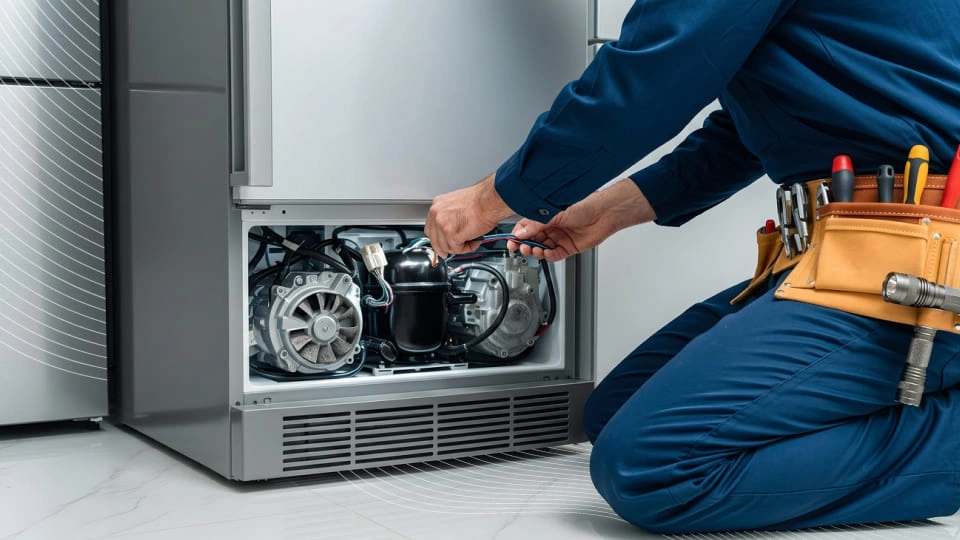
Step 1: Unplug the refrigerator and pull it away from the wall
Safety first. Disconnect the unit from power and pull it away from the wall so there's enough room to work. Remove any food and clear the space around the back of the appliance.
Step 2: Locate and remove the old compressor
This component is typically found at the bottom rear of the fridge. It's a round or oval black component with refrigerant lines running from it. On some models, you may need to remove a back panel to access it. Using brazing or cutting tools, the technician disconnects the refrigerant lines connected to the compressor. The electrical connectors and mounting hardware are then removed, freeing the unit from the appliance.
Step 3: Discharge and recover the refrigerant
This is the step that requires EPA certification. If your refrigerator uses CFC or HCFC refrigerants, safe recovery is essential to avoid environmental harm, so this step should always be handled by a trained technician. They use a recovery machine and a cylinder matched to the correct pressure. Special valves or piercing tools may be used if access points are unavailable. New cylinders must be vacuumed before use, and refrigerant levels should never exceed 80% capacity.
Step 4: Install the new unit
The replacement unit is mounted in position. Refrigerant lines are connected using brazing (a high-heat bonding process). Electrical connectors are reattached. The technician confirms all connections are secure before proceeding.
Step 5: Pull a vacuum on the system
A vacuum pump is connected to remove all air and moisture from the sealed refrigerant system. This step is critical when you are trying to understand how to replace a refrigerator compressor. Any residual moisture can cause ice blockages or corrosion inside the lines.
Step 6: Recharge with refrigerant
Once a proper vacuum is confirmed, the system is recharged with the correct type and amount of refrigerant as specified by the manufacturer. Using the wrong refrigerant or an incorrect amount can damage the new unit almost immediately.
Step 7: Test the system
The fridge is plugged back in and running through a full cooling cycle. The technician checks for leaks, monitors temperature readings, and confirms the system is operating correctly before signing off on the repair.
How Much Does It Cost to Replace a Refrigerator Compressor?
The cost of a compressor replacement can be around $700-$1250, depending on several factors. These include the appliance brand, the required type, labor rates in your area, and whether the refrigerant needs to be replaced.
Estimated Cost Breakdown of Refrigerator Compressor Replacement
|
Cost Component |
Estimated Range |
|
Replacement compressor (part) |
$200 – $400+ |
|
Labor (technician) |
$500 – $850 |
|
Refrigerant recharge |
$50 – $150 |
|
Total estimated cost |
$750 – $1,400+ |
Always get two or three quotes before committing to a repair. The cost difference between service providers can be significant, especially for labor.
As you can see compressor replacements can get expensive fast, which is why many homeowners start looking into the best home warranty plans to keep those repair costs in check.
Is it Worth Replacing a Refrigerator Compressor?
This is the question most homeowners are really asking. And the honest answer is: it depends. A useful rule of thumb in the appliance repair world is the 50% rule. This means if the cost of the repair exceeds 50% of the cost of a comparable new appliance, replacement is usually the smarter financial decision.
Repair is likely worth it if:
- The refrigerator is less than 8 years old
- It's a high-end or built-in model with significant replacement value
- The rest of the appliance is in good working condition
- The total repair cost is under 50% of a replacement unit
- The unit is still under a manufacturer's warranty or an extended plan
Replacement may make more sense if:
- The refrigerator is 10+ years old
- Other components (fan, thermostat, seals) are also showing wear
- The repair cost is close to or even higher than half the price of a new refrigerator.
- Energy inefficiency is already a concern with the current unit.
A technician can help you weigh the specifics of your appliance. Don't rush the decision. A quick call or diagnostic visit can save you from spending money in the wrong direction.
How a Home Warranty Can Help
Compressor repairs are expensive, and they tend to happen without warning. One week, everything is fine, but the next, you are facing a $1,000+ repair bill and a fridge full of food that can't wait.
A home warranty service can help cover the cost of repairing major home appliances and systems. In some cases, it may also help with replacement if they fail due to normal wear and use. Refrigerators, including their internal components, are commonly covered under standard appliance plans.
When you submit a claim for a refrigerator issue, the warranty provider arranges for a technician to diagnose the problem and carry out the repair. You pay a service call fee, typically far less than the full out-of-pocket cost, and the covered repair is handled from there.
Final Thoughts
A refrigerator compressor failure is one of the more disruptive appliance problems a homeowner can face. It is expensive, technical, and time-sensitive. Understanding how to replace a refrigerator compressor and what it costs puts you in a much stronger position to act quickly and wisely.
If you're already seeing early warning signs, like inconsistent temperatures, unusual noise, etc., don't wait for a complete failure. A professional diagnosis now can help you get ahead of a bigger problem before it takes your groceries with it. Instead of handling high repair costs on your own, choosing the best-rated home warranty company can provide long-term protection and peace of mind.



1-800-388-1918
Protect Your Property, Secure Your Peace: Your Plan Starts Here.