
If you own a home with a septic system, you already know it requires a different kind of attention than city sewer connections. Wastewater issues can surface at the worst times, and repairs are rarely cheap. So it makes sense to ask: Do home warranties cover septic systems? The answer is not always straightforward. Coverage can vary widely depending on the provider and the plan you choose.
Some home warranty companies offer it as an add-on, and a handful of them bundle it into premium plans. Knowing the difference before you sign up can save you a lot of frustration later. This blog post breaks down exactly how wastewater systems work and what to look for in a home warranty for septic systems. Read through before your next coverage decision.
What is a Septic System and How Does It Work?
A septic system is a private, on-site wastewater treatment setup used in homes not connected to a public sewer line. Instead of routing waste to a municipal facility, your home handles it on your own property.
What are the Main Components of a Septic System?
Understanding what makes up this system helps you know what may or may not be covered by a home warranty service contract.
- Septic Tank: A buried, watertight container, usually made of concrete, fiberglass, or polyethylene, that collects all wastewater from your home.
- Inlet and Outlet Pipes: Waste flows in through the inlet pipe. Partially treated liquid exits through the outlet to the drain field.
- Drain Field (Leach Field): A network of perforated pipes buried in gravel trenches. Liquid waste filters through the soil here.
- Distribution Box: Routes the liquid evenly across the drain field lines.
- Pump (in some systems): Used in pump-assisted or mound systems where gravity alone cannot move waste.
Do Home Warranties Cover Septic Systems? A Homeowner's Complete Guide
The short answer is: Yes, sometimes, but not always fully. Most standard plans do not include septic systems in their basic coverage. Instead, they are typically offered as an optional add-on. If included, coverage often applies only to specific components, not the entire system.

Some providers may cover the pumping mechanism or specific components of a pump as part of their plumbing or well/sump coverage, but this varies. Always verify line by line. If a company offers septic system coverage as an optional add-on, it means you pay an additional premium on top of your base plan. The add-on may cover tank pumping, repairs to the tank, and sometimes the aerobic components.
What Components Are Most Often Covered?
- Septic tank itself (repairs due to mechanical failure)
- Sewage ejector pump
- Aerator motor (in aerobic systems)
- Pumping costs in some plans
- Accessible line stoppages connected to the tank
Drain fields and distribution boxes are far less commonly covered. These components are expensive to repair and tend to be excluded even in premium tiers. Also, coverage is usually capped. There may be limits on how much the provider will pay per repair.
Why Is It Necessary to Have a Septic System Home Warranty?
A sewage failure is not just a plumbing inconvenience. It's a health hazard, an environmental issue, and a budget emergency all at once. Sewage backing up into your yard or home creates a serious contamination risk. Having a home warranty for septic systems means you have a financial safety net for one of the costliest repairs a homeowner can face.
How Much Does a Septic System Repair Actually Cost?
Costs vary based on the type of repair, the system size, and your location. Take a look at the rough breakdown of costs when you don’t have a protection plan in place:
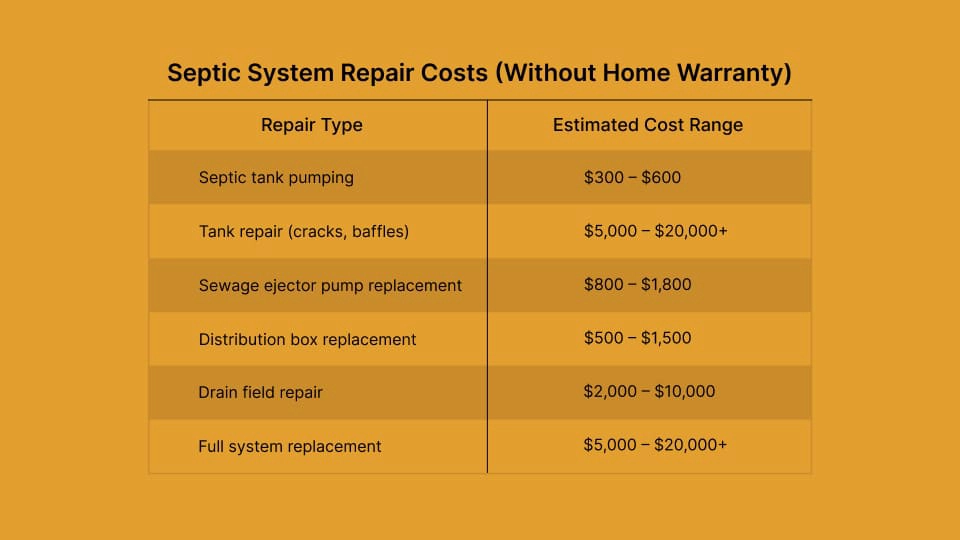
As per the U.S. Environmental Protection Agency (EPA), approximately one in five U.S. homes relies on a septic system for wastewater treatment. This makes sewage system coverage a real concern for a large portion of American homeowners.
What are the Risks of Going Without Coverage?
Skipping wastewater management coverage might seem like a way to cut costs. But consider what you're exposed to:
- Unplanned out-of-pocket costs: A single drain field failure can wipe out an emergency fund in one repair bill.
- Health and safety risks: Sewage backups expose your family to harmful bacteria and pathogens.
- Property value impact: A failed system is a major red flag on any home inspection report.
- Environmental violations: Some states hold homeowners legally responsible for sewage seeping into groundwater.
Who Benefits Most From Septic Home Warranty Coverage?
- Rural homeowners: Properties outside city limits almost always use sewage systems.
- Buyers of older homes: Systems installed 20+ years ago are closer to the end of their life.
- First-time homeowners: Those unfamiliar with wastewater maintenance benefit from the support structure a plan provides.
- Homeowners with aging systems: If your tank hasn't been serviced in years, coverage provides a financial buffer while you catch up on maintenance.
What are the Common Exclusions in Septic System Home Warranty Coverage?
Even when a warranty plan includes septic system coverage, there are nearly always exclusions. Knowing these gaps upfront keeps you from a surprise denial when you submit a claim.
What Does a Septic System Home Warranty Usually Not Cover?
-
Drain fields and leach fields: This is the most commonly excluded component. Drain field repair is expensive and often excluded entirely.
-
Pre-existing conditions: If your system has known issues at the time of enrollment, those problems will not be covered.
-
Misuse and improper maintenance: Failure to pump the tank on schedule or flushing inappropriate materials gives providers grounds to deny a claim.
-
Root intrusion: Tree roots damaging pipes or the tank are often excluded as they're considered an external cause.
-
Ground movement or soil issues: Damage from shifting soil or ground settling is usually a no-go.
-
Regular upkeep: Tasks like tank pumping, system cleaning, and inspections are typically handled by the homeowner.
How To Check If Your Home Warranty Covers Your Septic System
Whether you are shopping for a new plan or reviewing an existing one, here is a practical checklist for confirming coverage before you rely on it.
Step 1: Review the sample contract. Download or request the full terms of service, not just a marketing summary. Look specifically for a "Septic System" or "Plumbing System" section.
Step 2: Ask about add-ons: If your base plan doesn't include septic, ask the provider directly whether it's available as an optional upgrade.
Step 3: Check the coverage components list: Identify which parts are included (tank, pump, aerator) and which are excluded (drain field, distribution box).
Step 4: Look for dollar caps: Find the per-claim and annual limits specifically tied to septic coverage. A strong protection plan should offer at least $1,000 in coverage.
Step 5: Confirm maintenance requirements: Some plans require proof of recent pumping or inspection. If yours does, be ready to document it.
The best home warranty for septic systems will typically cover the tank and pump under normal wear. It will offer a meaningful coverage cap, ideally $1,500 or more. Most importantly, the company provides access to experienced, vetted service technicians so that when things go wrong, you have someone to rely on.
FAQs About Septic Systems Home Warranty Coverage
Is septic system coverage included in standard home warranty plans?
Typically, no. A standard warranty plan covers plumbing stoppages inside the home but stops at the main sewer line's connection point. The septic tank, drain field, and related components are usually not part of a base plan.
Do home warranties cover septic tank pumps?
Many plans do cover the sewage ejector pump or aerobic pump motor. This is one of the more commonly covered components of septic systems. Still, confirm with your provider what specific parts are included.
Can I add septic coverage to an existing plan?
In many cases, yes. Some providers allow you to add a septic system add-on at renewal or even mid-term. Contact your provider directly to ask about availability and pricing.
Do home warranties cover septic systems for older homes?
Coverage is available regardless of home age in most cases. However, if the system has known issues or is already failing at the time of enrollment, those specific problems will likely be excluded as pre-existing conditions.
Related Posts




1-800-388-1918
Protect Your Property, Secure Your Peace: Your Plan Starts Here.