
Home systems do not fail all at once, and problems usually start small. A strange HVAC noise, weak water pressure, or an appliance that suddenly stops working properly can all lead to expensive repairs. Sound familiar? This is exactly the kind of moment where the home warranty vs home maintenance debate becomes very real.
Both options are designed to protect your property, but in completely different ways. One is proactive. The other kicks in after something breaks. Choosing between them, or knowing how to combine both, can make a real difference to your annual house repair expenses. This guide breaks it down clearly so you can decide what actually makes sense for your situation.
What is the Difference between a Home Warranty and Home Maintenance?
Let's clear up the confusion once and for all. Home warranty coverage and home maintenance are not interchangeable terms. They serve opposite purposes, operate on different timelines, and protect you in different ways.
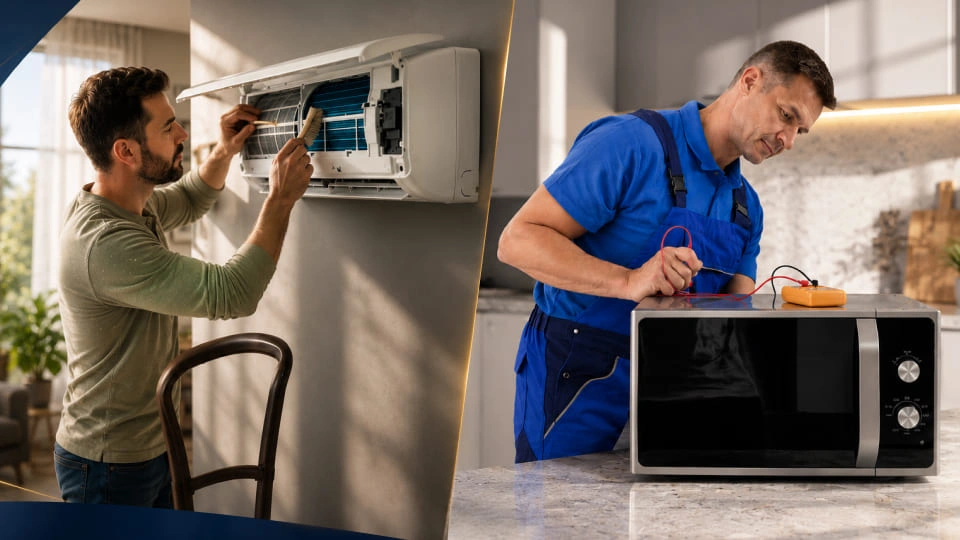
Home maintenance is everything you do before something breaks. A home warranty is a protection plan that you rely on after it does.
Home Maintenance: Prevent Before It Happens
Routine maintenance includes any task that keeps your systems and appliances running at their best. These are your home maintenance responsibilities as an owner.
- Purpose: Prevent breakdowns before they occur
- When it is required: Ongoing; scheduled year-round
- What it covers: Inspections, tune-ups, filter changes, minor fixes
- Who does the work: Homeowner, or hired contractors
- Cost: Ranges from a few hundred to several thousand dollars annually
Examples include:
- Air conditioning maintenance
- Plumbing system upkeep
- Water heater maintenance
- Electrical system inspections
- Washer and dryer maintenance
- Roof inspections
- Gutter cleaning
- HVAC cleaning and filter replacements
These tasks are your responsibility as a homeowner. Ignoring them often leads to larger repair bills later.
Home Warranty: Repair After the Breakdown
A home warranty is a service contract that helps cover the cost of repairs or replacements when covered systems and appliances fail due to normal wear and tear. HVAC systems, plumbing, electrical, water heaters, refrigerators, washers, dryers, and dishwashers are common examples of covered appliances.
- Purpose: Cover repair costs when systems or appliances fail
- When it activates: 30-days after a warranty plan is purchased
- What it covers: Mechanical failures from normal wear, not neglect or accidents
- Who does the work: Warranty provider dispatches a technician
- Cost: Typically $350–$900 per year, plus a per-visit service fee of $75–$150
Most home warranties cover items such as:
- HVAC systems
- Plumbing systems
- Electrical systems
- Water heaters
- Kitchen appliances like cooktop, microwave, dishwasher, garbage disposal, etc.
- Laundry appliances like washers and dryers
- Septic systems
- Sump pumps
- Well pumps
- Plumbing stoppage
Instead of paying the full repair bill, homeowners usually pay a service fee for covered claims. This type of repair protection is especially useful for aging systems or appliances that no longer have manufacturer warranties.
Key difference to remember here:
Home maintenance is a habit. A home warranty is a financial safety net. One reduces the chances of a breakdown. The other limits the financial damage when a breakdown happens anyway.
Homeowners who skip regular upkeep often feel it in their wallets. Angi's 2025 homeowner spending data highlights just how challenging home upkeep has become for many Americans. Nearly half of homeowners (48%) say the stress associated with mandatory home repairs has increased since January. While 62% report being more concerned about affording maintenance costs compared to the end of 2024.
These findings reflect a growing concern among property owners as repair bills, maintenance needs, and system failures continue to put pressure on household budgets.
How Much Do Home Repairs and Maintenance Cost?
One of the biggest reasons homeowners compare maintenance costs with warranty coverage is simple: the numbers can add up quickly. Routine upkeep helps reduce wear on your systems and appliances, but it does not eliminate the risk of expensive breakdowns.
Looking at both ongoing upkeep expenses and potential repair costs side by side makes it easier to understand where your money goes each year and where additional protection may provide value.
What Routine Maintenance Actually Costs
Most financial experts recommend setting aside 1%–3% of your home's value annually for upkeep. For a $400,000 property, that equals roughly $4,000–$12,000 per year. Recent data suggests homeowners are spending even more. According to Bankrate's 2025 study on home maintenance, the average homeowner spends approximately $8,808 annually on maintenance alone.
Typical Annual Maintenance Costs
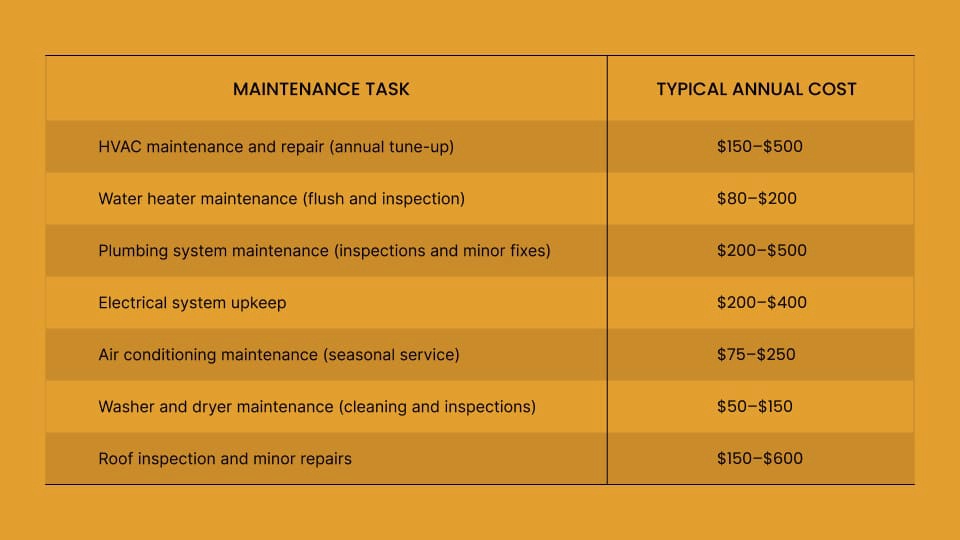
These are preventive home maintenance costs; money you spend to keep things working. They don't cover what happens when something fails entirely.
What Major Home System Breakdowns Really Cost
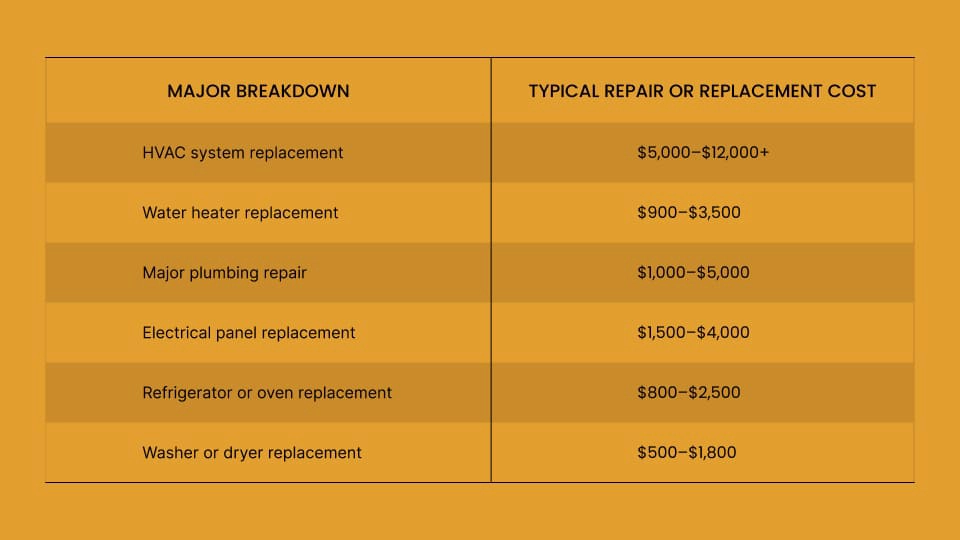
This is where unexpected repair costs hit hardest. A single major failure can erase months of careful maintenance spending:
Repair or Replacement Cost of Home Systems & Appliances
Do You Need a Home Warranty If You Keep Up With Maintenance?
Yes, a home warranty is still worth having even if you regularly maintain your property. Routine maintenance does not eliminate the possibility of expensive breakdowns. Even well-maintained systems and appliances eventually wear out with age and use. In certain situations, a home appliance warranty can provide additional financial protection by helping manage repair or replacement costs that routine upkeep alone cannot prevent.
1. Your home is over 10 years old
Aging systems don't follow maintenance schedules. HVAC units, water heaters, and kitchen appliances all have finite lifespans. Once they cross the 10–15 year mark, the risk of a major breakdown climbs sharply, regardless of how consistently you have maintained them. A home appliance warranty for aging appliances and systems acts as a financial buffer for what's statistically likely to fail.
2. You don't have a large emergency fund
The Bankrate 2025 Homeowner Regrets Survey found that 42% of homeowners said home maintenance and hidden costs were higher than expected. These expenses ranked as the leading cause of frustration among homeowners who reported regrets about their purchase. If a $5,000 furnace repair or a $3,000 plumbing emergency would strain your budget, a warranty can help reduce the financial impact. Instead of facing a large unexpected bill, you pay a more predictable coverage cost and service fee.
3. You have just purchased a home
New home buyers often stretch their finances at closing. Moving costs, down payments, and immediate upgrades leave little cushion. During the first year, a warranty protection plan covers appliances and systems that may fail before you've had time to build up a dedicated repair fund.
4. You are a landlord or managing a rental property
For landlords, repair coordination is an ongoing challenge. Tenant calls about broken dishwashers or failing HVAC units require fast responses. Having the best home warranty plan simplifies that process: you submit a claim, the provider dispatches a technician, and your liability stays limited. Some warranty providers offer multi-property plans, making this an even stronger option for real estate investors managing multiple properties.
Case Study of Robert: The Dual-Strategy Homeowner
Here is a real-world scenario to help you understand why you need both.
Robert owns a 1998 property in Charlotte, North Carolina. He runs a tight maintenance schedule, with HVAC filter changes every 90 days, annual water heater flush, and quarterly plumbing walkthroughs. He also carries a mid-tier home warranty plan at $780 per year.
Over three years, he had two warranty claims: a furnace ignitor replacement and a dishwasher repair. Both claims were submitted and handled without issue because he had documented proof of a consistent HVAC maintenance checklist and appliance upkeep. His total out-of-pocket on those repairs: $150 in service fees.
His upkeep costs ran about $1,100 annually. Combined with his warranty premium, his total annual protection spend was roughly $1,880. Without the warranty, those two repairs alone would have cost him approximately $2,400. The calculation worked, and that doesn't factor in the larger failures still ahead for his 27-year-old property.
Concluding Thoughts
Home warranty vs. home maintenance isn't really a competition. They protect you at different stages of the same problem. Routine upkeep reduces how often systems fail. A home warranty limits what you pay when they do anyway.
If your property is under five years old with new appliances and a dependable emergency fund, a focused maintenance routine may be all you need for now. But older homes often come with aging systems and appliances that are more likely to need repairs. If an unexpected $5,000 repair bill would be difficult to absorb, home warranties are worth considering. In fact, the combination of both is the most reliable approach.
If you're looking for comprehensive coverage that works alongside your maintenance habits, First Premier Home Warranty offers flexible home warranty plans built for real homeowners. Our coverage protects the systems and appliances you rely on most, with easy-to-file claims and reliable service. We are consistently rated among the best home warranty options for homeowners who want predictable costs and no surprises when something breaks.
Frequently Asked Questions
What is the main difference between a home warranty and home maintenance?
Home maintenance is proactive; it involves regular tasks like HVAC tune-ups and plumbing inspections to prevent breakdowns. A warranty is reactive; it covers the cost of repairs or replacements when covered systems and appliances fail due to normal wear and tear. The two serve different functions and are not substitutes for each other
What do home warranties usually cover?
Most plans cover major systems and appliances such as HVAC systems, plumbing, electrical systems, water heaters, refrigerators, ovens, dishwashers, garbage disposal, washing machines, electric dryers, etc.
Does a warranty cover things that weren't maintained properly?
No. Most warranty contracts exclude breakdowns caused by neglect, improper installation, or pre-existing conditions. This is why routine home upkeep matters even when you carry a warranty. Documented upkeep protects your eligibility to file a claim when a covered system fails.
Does a home warranty replace regular maintenance?
No. Home maintenance responsibilities still belong to the homeowner. Skipping supervision and upkeep may even affect claim approvals.
Are home warranties worth it for older homes?
Yes, they provide more value for homes with aging systems or appliances that are more likely to fail unexpectedly. As systems and appliances age past the 10-year mark, the risk of breakdowns increases significantly, making home warranties increasingly worthwhile as the property gets older.
What maintenance tasks should homeowners prioritize?
Focus on HVAC maintenance and repair checks, plumbing inspections, electrical system upkeep, gutter cleaning, and water heater supervision throughout the year.
Related Posts



1-800-388-1918
Protect Your Property, Secure Your Peace: Your Plan Starts Here.