
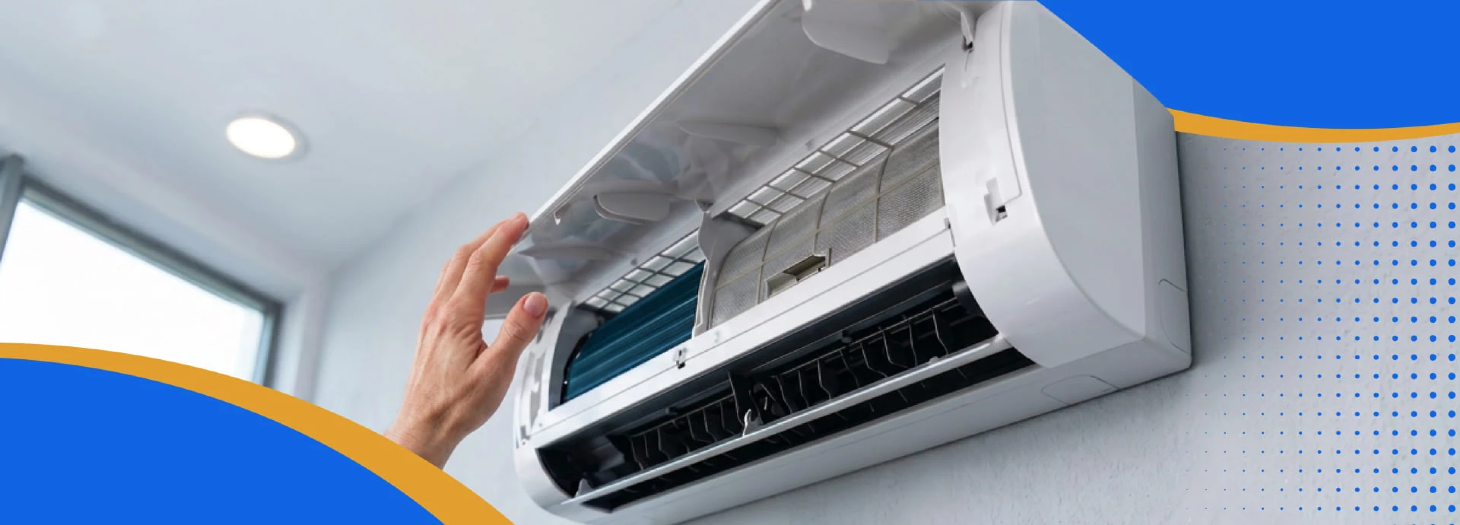
When your air conditioner stops cooling on the hottest afternoon of the year, you want answers fast. Most common air conditioner problems trace back to a short list of causes. Dirty filters, low refrigerant, worn parts, and an inaccurate thermostat top that list. Most of these issues give warning signs before the system fails outright.
This guide covers what typically goes wrong inside a central air conditioning system. We will show what each problem looks like in a real home. You will also learn how to tell a quick DIY fix apart from a job for an HVAC technician. Finally, we explain how the best home warranty plan can help with the repair bill.
What are the 7 Most Common Air Conditioner Problems?
Most residential AC issues come down to a short list of repeat offenders. Here is what tends to go wrong, why it happens, and how it usually can be fixed.
1. Dirty Air Filter
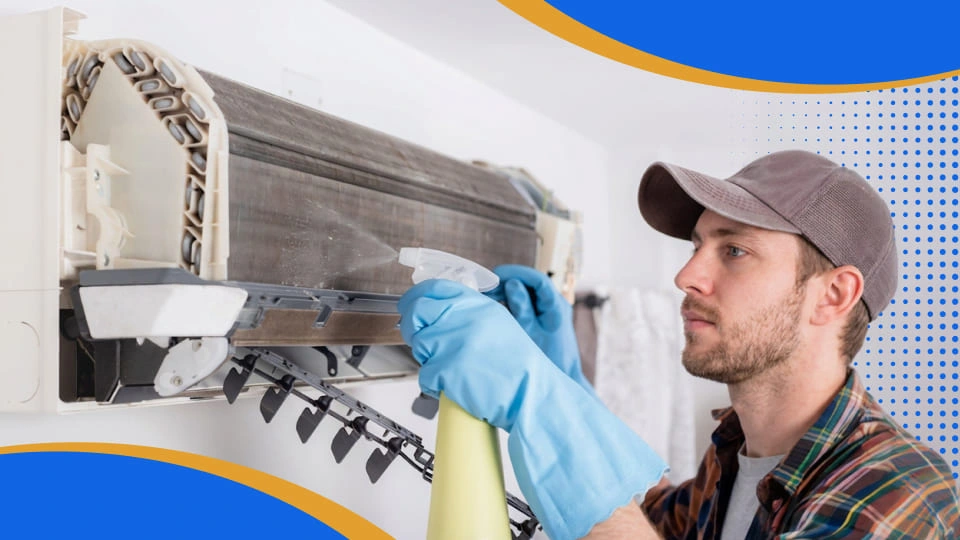
Consumer Reports identifies clogged, dirty filters as one of the most frequent causes of AC performance issues. It is also the easiest one to prevent. Dust and pet hair build up over a few weeks and block airflow into the system. With less air moving across the coil, the unit struggles to pull heat out of your home.
You may notice weak airflow from vents or rooms that stay warmer than others. Heating and cooling already account for close to half of a typical home’s energy use. According to ENERGY STAR, a dirty filter forces the system to work harder, wasting some of that energy.
How to Fix It:
- Inspect the air filter once a month during the cooling season.
- Replace disposable filters every 1–3 months as needed.
- Use the filter size recommended by the manufacturer.
- Keep supply and return vents free from obstructions.
- Monitor airflow after replacing the filter.
- Schedule an HVAC inspection if cooling performance does not improve.
2. Refrigerant Leak
Refrigerant carries heat out of your home, so a leak directly causes an air conditioner not cooling complaint. Common signs include AC blowing warm air, a hissing sound near the indoor unit, or ice on the refrigerant lines. Refrigerant leaks rarely seal themselves.
Running a low-charge system for too long puts extra strain on the compressor. Refrigerant work is regulated by the EPA, so this repair is best left to a professional with the right equipment.
What you can do:
- Check for warm airflow or reduced cooling performance.
- Look for visible ice buildup on refrigerant lines.
- Turn off the system if icing becomes severe.
- Avoid adding refrigerant without diagnosing the leak.
- Contact a licensed HVAC technician for leak detection and repair.
- Have the system repaired and recharged to proper levels.
- If you have a home warranty in place, file a claim to report the issue for repair.
3. Frozen Evaporator Coil
Often paired with low refrigerant or a dirty filter, a frozen evaporator coil cuts off airflow. It can also lead to water leaking from the air conditioner as the ice melts. Restricted airflow allows moisture on the coil to freeze instead of draining away normally.
The underlying cause still needs attention, whether that means a new filter or a refrigerant check. Letting a coil freeze repeatedly can add stress to the compressor over time.
How to Fix It:
- Turn off the cooling mode and allow the coil to thaw.
- Check and replace a dirty air filter if needed.
- Ensure vents and registers remain fully open.
- Inspect for airflow restrictions around the unit.
- Have refrigerant levels checked by a professional.
- Address the root cause to prevent repeat freezing.
4. Dirty Condenser Coils
The condenser unit outside your home releases the heat your AC pulls from the indoor air. The U.S. Department of Energy states that outdoor condenser coils can become dirty from dust, debris, and nearby foliage. Dirty coils reduce airflow and system efficiency, causing the air conditioner to consume more energy and perform less effectively.
Dirty condenser coils block that process from working efficiently. Grass clippings, dust, and leaves collect on the coil fins, especially during lawn mowing season. With heat unable to escape, the compressor runs longer and harder, which adds wear and raises your utility bill.
What you can do:
- Turn off the power before cleaning the outdoor unit.
- Remove leaves, grass, and debris around the condenser.
- Gently rinse the coils with a garden hose.
- Maintain at least two feet of clearance around the unit.
- Avoid using high-pressure water on coil fins.
- Schedule professional cleaning for heavily clogged coils.
5. Faulty Thermostat
Thermostat problems can look exactly like compressor failure, since the air handler may not respond at all. A miscalibrated sensor, dead batteries, or a loose wire can cause a thermostat to misread the room temperature. Smart thermostats add another layer, since a dropped Wi-Fi connection or software glitch can block signals to the AC.
How to Fix It
- Confirm the thermostat is set to cooling mode.
- Replace batteries if the display appears weak.
- Verify the temperature setting is correct.
- Restart or reset a smart thermostat if needed.
- Check the circuit breaker for power interruptions.
- Contact an HVAC technician if the problem continues.
6. Capacitor Failure and Electrical Issues
Electrical issues, especially capacitor failure, often show up as a unit that hums but will not start. Sometimes the unit shuts off shortly after turning on instead. The capacitor gives the compressor and fan motor the jolt of power they need to get moving. Worn capacitors are common in units older than eight years, particularly after repeated short cycling.
Small electrical problems can quickly grow into larger AC repair issues if left unchecked. Regular tune-ups help identify worn AC components early, reducing the risk of unexpected cooling interruptions when temperatures are highest.
What can we do:
- Listen for humming or clicking sounds during startup.
- Check for frequent short cycling or unexpected shutdowns.
- Inspect the circuit breaker for tripped switches.
- Turn off the unit if electrical issues are suspected.
- Schedule professional testing of electrical components.
- Include capacitor inspection during annual maintenance visits.
7. Clogged Condensate Drain
A blocked condensate drain is the leading reason for water pooling near an indoor AC unit. Algae, dust, and debris build up inside the drain line over a cooling season, especially in humid climates. Once the line backs up, water has nowhere to go but back into the unit or onto the floor.
Many systems include a safety switch that shuts the AC off when this happens. It can feel like a sudden breakdown even though the fix is simple.
How to Fix It
- Inspect the area around the indoor unit for moisture.
- Locate the condensate drain line and check for blockage.
- Clear minor clogs using a wet-dry vacuum.
- Flush the line with a water and vinegar solution.
- Test the system after clearing the blockage.
- Schedule service if water leakage continues.
How Can You Spot AC Trouble Before It Becomes an Emergency?
Many of these common air conditioner problems give off small clues before the unit stops working altogether.
- Short cycling means the AC turns on and off every few minutes. It often points to a dirty filter, low refrigerant, or a failing capacitor.
- Uneven cooling between rooms can mean blocked ducts or a system sized wrong for the home. Strange noises such as grinding, squealing, or rattling usually trace back to a loose part or a failing fan motor.
- A musty or burning smell from the vents is worth checking right away. It can signal mold growth or an electrical issue.
Tracking small changes like these helps homeowners catch a repair early, before it turns into a full breakdown.
How Does a Home Warranty Help Cover Air Conditioner Repairs?
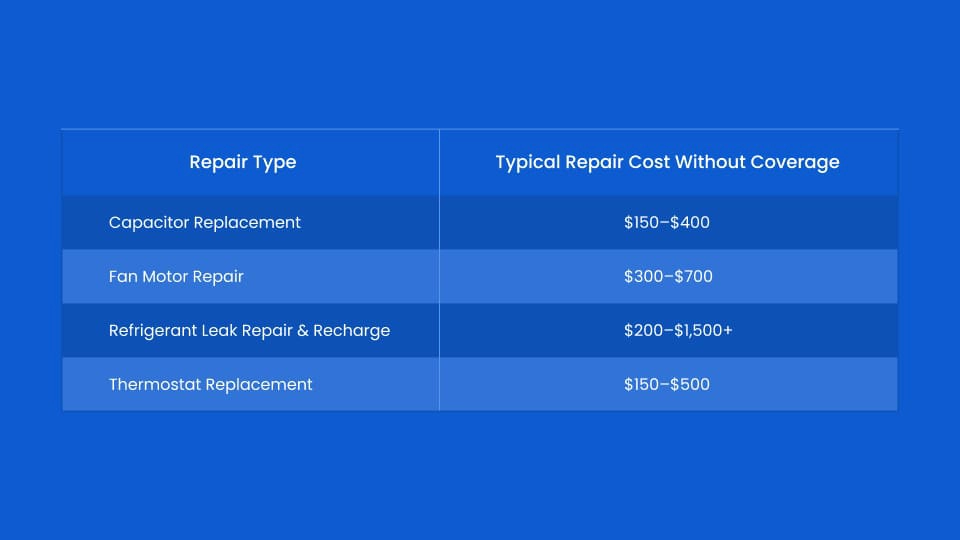
Repairing common AC problems like a failed capacitor, a refrigerant leak, or a broken fan motor can get expensive fast. Costs climb higher during peak summer months when HVAC technicians are booked solid.
A home warranty service is built to soften that financial hit. Instead of paying full price for a service call, parts, and labor, costs change with a home warranty in place. It helps manage those repair expenses by covering eligible HVAC components affected by normal wear and tear.
What AC components can a home warranty cover?
Home warranties cover repairs of the following AC parts and components:
- Compressor components
- Fan motors and fan blades
- Internal electrical controls
- Wiring and relays
- Thermostats
- Switches and control systems
- Accessible ductwork connected to covered systems
- Other mechanical components necessary for system operation
Coverage is subject to plan terms, exclusions, limitations, and eligibility requirements.
How Much Could You Save Compared to Paying Out of Pocket?
First Premier's Platinum Plan is available for $599.99 per year and provides coverage for AC repairs. For many homeowners, a single major HVAC or AC repair can cost a significant portion of that annual budget. Also, costs vary depending on the failed component, labor rates, and your location.
Common AC Repair Costs
Final Thoughts
Now that you know the common air conditioner problems homeowners face most often, you can spot trouble early. You will also know when to call for help. Small issues like a dirty filter are simple do-it-yourself fixes. Refrigerant leaks and electrical issues call for a trained technician instead. Either way, repair costs can add up fast during peak summer demand.
Pairing your AC maintenance routine with First Premier Home Warranty coverage helps keep costs predictable. We are considered one of the top home warranty providers, thanks to our comprehensive coverage options and constant support for system breakdowns.
Looking for affordable home warranty coverage? Call 1-800-388-1918 to explore your options or click here for a free quote.
What Common AC Questions Do Homeowners Ask?
How often should a central air conditioner be serviced?
Most manufacturers recommend a professional tune-up once a year, ideally in spring before peak cooling season begins.
Can a dirty filter really stop an AC from cooling completely?
Yes, a severely clogged filter can restrict airflow enough to freeze the evaporator coil and shut the system down.
Is it normal for an air conditioner to run constantly in extreme heat?
Some longer run times are normal in extreme heat. Constant nonstop operation, though, usually points to low refrigerant or a sizing issue.
When does an AC problem call for a repair versus a new system?
A unit under ten years old with one failed part is usually worth repairing. Older units with repeated failures may make more financial sense to address with a new system.
What is the average lifespan of a central air conditioning system?
Most central AC systems last 12 to 17 years with regular maintenance, depending on climate and usage.



1-800-388-1918
Protect Your Property, Secure Your Peace: Your Plan Starts Here.